
National Historical Park · Hawaii
Trails in Kaloko-Honokōhau National Historical Park
16 named trails · 7 miles · 1 with the Park Service's own write-up. The lines, trailheads and points are the Park Service's; the write-ups are the Service's own words; the climbing is read from USGS elevation along each line.
16 trails, A to Z.
Ala Kahakai Trail
Picnic areasRanger stations
Along the way Picnic Area ʻAiʻōpio Ranger Station
Ala Kahiko Trail
Ala Mamalahoa Trail
Ala Mauka-Makai Trail
Petroglyphs in the Park! the Park Service's write-up
dogs allowed
Start Petroglyphs (Kiʻi Pohaku)
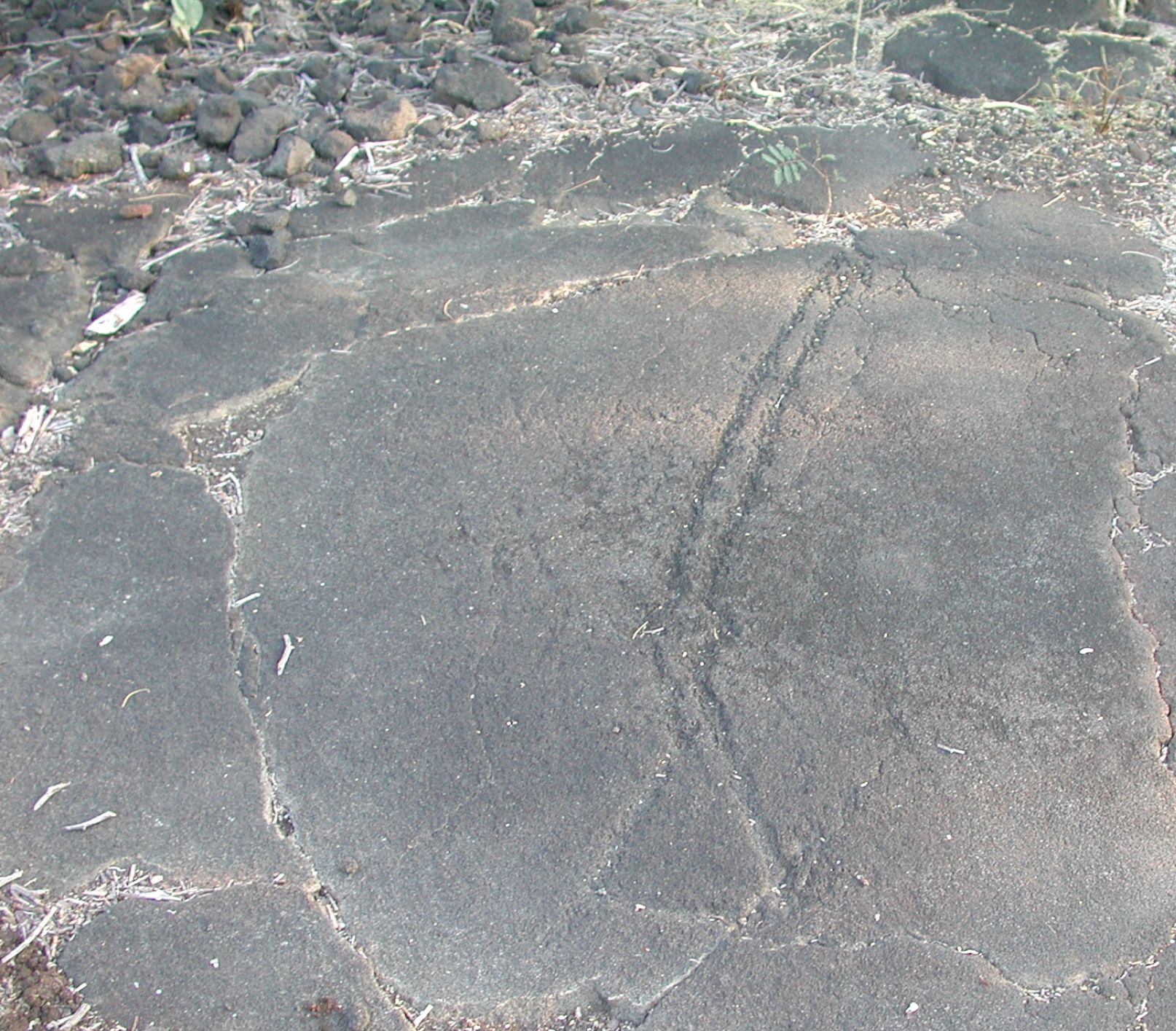
A very long time ago someone labored in hot and humid conditions with crude tools to meticulously draw these images. Could we be looking through a window to a glimpse of the past?
The petroglyphs of Honokōhau were pecked and carved on horizontal rock surfaces. A master craftsman laboring with stone tools and human hands in the hot sun made these into distinctive works of art that have become reservoirs of information. This area exhibits many unique petroglyphs of various sizes and shapes. They include muscular, human-like figures with spears, representations of canons, intrepid sailing ships of the era, and crude flint lock muskets. These images were all symbolic of power and interpersonal aggression.
The theme of war and violence reverberates strongly here. There are also figures interpreted to be of female gender in this area, why are they drawn here? Do they exist to balance the powerful male energy?
To understand these artifacts in stone one must understand the Hawaiian culture. The world of ancient Hawaii involved the daily worship of the gods of nature. The people had a strong reverence and connection with the land. They lived with powerful forces that were often opposite and chaotic yet, somehow, these came together to create a harmonious balance.
In this world of long ago, the people of the land knew how to battle, and yet they knew how to play and celebrate life with two main seasons during the year. In the time of Ku, fierce battles were fought among armies throughout the islands. In the next season, the makahiki season, all fighting ended and the people celebrated the god lono, spending time with their families and celebrating the harvest.
Many activities and ceremonies were practiced during these two main seasons, which were dictated by the rising and setting of the stars in the sky.
Many people say that the meanings of the petroglyphs you see before you will be forever hidden with the passing of time. Ancient people from many cultures around the world have been known to record their stories and events in their life in the form of rock art with symbols and figures.
With a predominant theme of weaponry here, both ancient and historical, perhaps there are symbolic messages in petroglyphs about the general nature of violence and war in human societies that we would be wise to decipher. Maybe the messages also speak to a rich spiritual relationhip to the land and the culture or they could simply be telling the story of how people lived on a daily basis. One thing that we do know is that there are stories in the rock that tell a story of a time much different than today. These petroglyphs are meaningful glimpses into that time and what people felt and thought about their society at that particular moment in history.
Many of the petroglyphs may have been completed during a time of great change in the 1800’s when ancient Hawaiian culture was being replaced by western influences. Many of the petroglyphs were also drawn during a time of contact with Europeans and others, notice the personʻs name and the guns. Were they drawing items acquired for personal safety or power for battle? If studied further, could the rock art in this area show similarities to our own society and its preoccupation with war? The ancient Hawaiians walked a delicate balance between war and violence and the enjoyment of life, which can also be said of our society today. Could we looking into a mirror at ourselves?
Please stay on the boardwalk at all times, as petroglyphs can be easily damaged by feet. Look in the metal box at the beginning of the boardwalk for a brochure. Please return the brochure to the box for the next visitor to use.
Accessibility Petroglyphs are only accessible by a hiking trail. The trail is mostly flat but has various types of lava terrain from rocky gravel to smooth pahoehoe. Closed toe shoes, water, and sun protection are highly recommended.
Beach Access Trail
Coastal Trail
Heiau Trail
Ranger stations
Along the way ʻAiʻōpio Ranger Station
Maintenance Road
Maintenance Road Spur
Park Boundary Trail
Parking Lot Sidewalk
Visitor centers
Along the way Hale Ho'okipa Visitor Center
Parking Lot-Visitor Center Trail
Visitor centers
Along the way Hale Ho'okipa Visitor Center
Petroglyph Loop
Visitor Center Parking Spur
Visitor Center Trail
Visitor centers
Along the way Hale Ho'okipa Visitor Center
More hikes the Park Service describes
Write-ups that name no single mapped trail, in the Service's words.
- Take a Lava Hike! · 1-2 Hours · dogs allowed
Many trails in the park were created in ancient times and others are from the historical era. These were trails for pack animals. The main park trail is a loop that circles the park and is 4.5 miles long or 7.2 kilometers. It is highly recommended to wear sturdy shoes, have sun protection and bring plenty of water. Many sections of the trail are rough and uneven and the ocean section can be effected by high tides and large surf.
About these trails
The lines are the National Park Service's public trails layer, the trailheads and the waterfalls, views, peaks and historic places along them the Service's public points of interest, read 2026-10-14 and simplified for the map. The write-ups are the Service's own "things to do", unedited. Heights come from USGS 3DEP through Terrain Tiles on AWS (Mapzen/Tilezen), read along each line and rounded; a short trail on steep ground can be off by a few tens of feet. Closures change: check the park's own site before you go.